Author: zenbeesapiary

  • Can Bees Recognize Human Faces?

    Can Bees Recognize Human Faces?

    Bees do not recognize people the way we do, but they can learn and remember simple face-like patterns, much like they do with flowers.

    How bees see

    Bees have two kinds of eyes. Compound eyes give them a wide angle view with thousands of tiny lenses. Simple eyes, called ocelli, help them sense light and movement.

    They see ultraviolet, blue, and green more clearly than red. Instead of focusing on fine details, bees pay attention to patterns, contrasts, and how shapes are arranged.

    Experiments with faces

    In experiments, bees were trained to associate a picture of a human face with a small sugar reward. After some practice, they flew directly to that face even when it was shown among others. What they used was not a person’s identity but the layout of shapes that resemble eyes, a nose, and a mouth.

    What this means

    Bees can learn and remember pictures of human faces for short periods. This does not mean they recognize individuals the way a dog does, but it shows how skilled they are at noticing patterns.

    Why it matters

    The same ability helps them in the field. Recognizing the arrangement of petals lets bees return to the same flowers. Remembering a human face in an experiment is another sign of how flexible and efficient their vision and memory can be.

  • Honey Guide: Types, Real vs Fake

    Honey Guide: Types, Real vs Fake

    Clear notes on how bees make honey, common varieties, and simple checks at home.

    What honey is

    Honey is a natural food that bees make from flower nectar or honeydew. They thicken it and store it in wax cells as food for the colony. Honey is mostly simple sugars that occur naturally in plants, with a little water and tiny traces from flowers and the hive. The water level is low, usually about 17–20%, which helps honey keep well.

    How bees make it

    Bees collect nectar from flowers and bring it back to the hive. Inside, other bees work it gently, and the whole colony helps it dry by moving warm air through the comb. As water leaves, the liquid becomes thick and stable. When it is ready, the cells are closed with a thin layer of wax. Natural enzymes from the bees help this transformation and give honey its long shelf life.

    Safety note: Do not give honey to infants under 12 months because of the risk of infant botulism.

    Common types of honey

    “Type” usually refers to the main flowers the bees visited (monofloral) or to a seasonal mix (multifloral). Color runs from very light to very dark, and flavor follows the flowers.

    • Acacia (black locust): very light and clean in taste, slow to crystallize.
    • Orange blossom: light with gentle citrus notes.
    • Buckwheat: dark, rich, and malty.
    • Wildflower (multifloral): flavor varies with season and region.

    Why some honeys crystallize fast

    Crystallization is natural. Honeys with more glucose and less fructose set sooner, and storage temperature also matters. Crystallized honey is safe to eat. If you prefer it liquid, place the jar in warm water and stir. Avoid high heat so you keep the aroma and delicate qualities.

    Lab tests are the only reliable way to prove if sugars were added, but you can still make smart choices at home.

    • Read the label. By food rules, honey must not contain added sugars. If it is filtered or sold for baking, it should say so.
    • Expect normal behavior. Crystallization over time is normal and not a sign of poor quality.
    • Buy from trusted sources. Local beekeepers and brands that share basic quality info are safer than mystery blends at very low prices.
    • Sense-check price and season. Very cheap “premium” honey or out-of-season offers can be a red flag.

    Quick storage tips

    Keep honey in a tightly closed jar at room temperature, away from heat and direct sun. If it sets, warm the jar gently and stir. Do not boil.

  • What to Do with Beeswax from a Hive?

    What to Do with Beeswax from a Hive?

    Simple, safe ways to clean and use beeswax: candles, wood polish, wraps, balms, and more. Plus rendering, storage, and key safety tips.

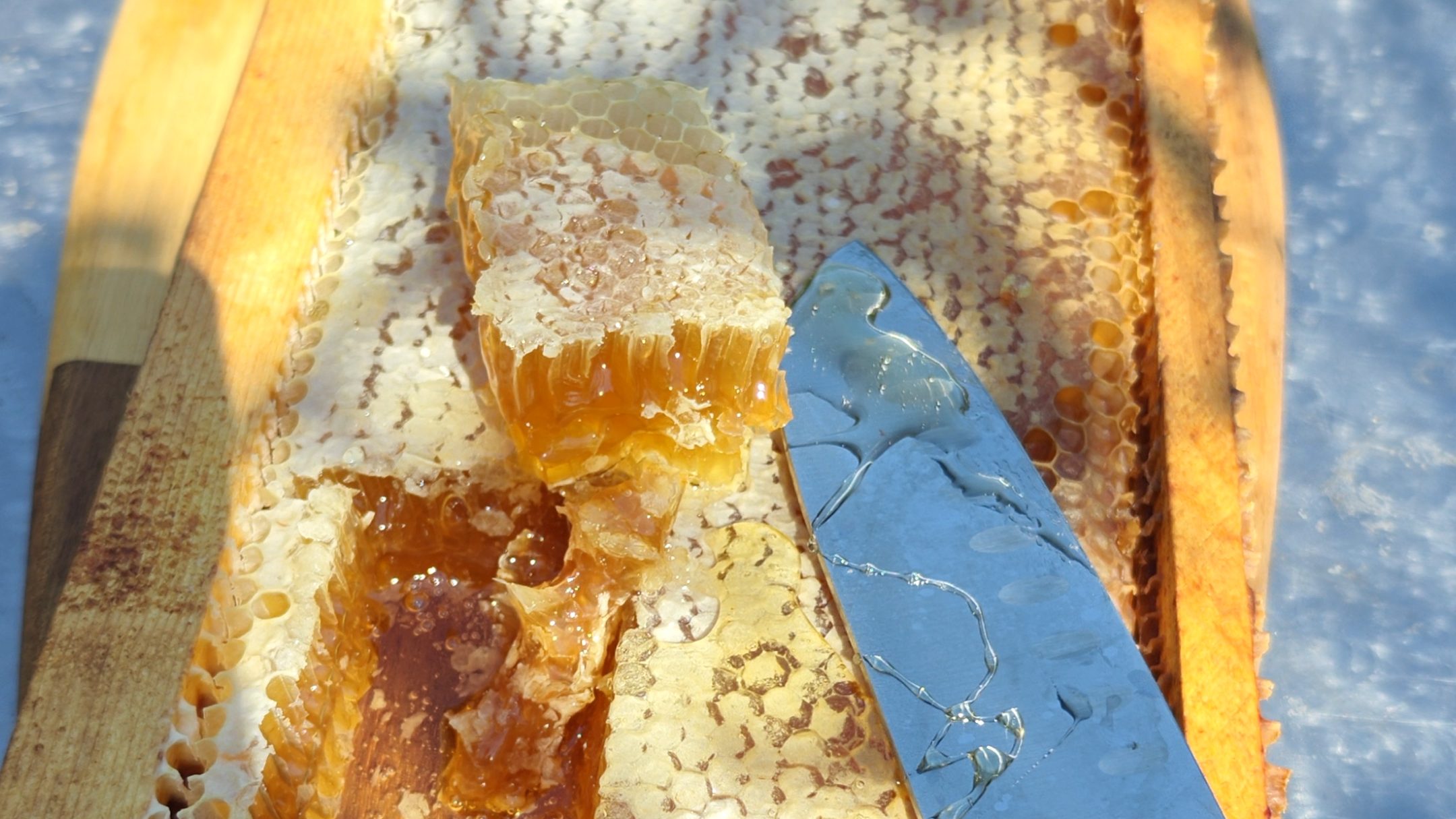
    Beeswax is the neat bonus you get when you uncap honey. Fresh cappings wax is light and clean. Older brood comb is darker and better for non-food uses. With a little care, you can turn any wax into useful things at home.

    Step 1: Clean the wax (rendering)

    1. Break up the wax. Rinse sticky cappings quickly in cool water if they are very honey-wet.
    2. Melt gently in a double boiler. Beeswax melts around 62–64°C (144–147°F). Keep the pot over hot water, not on direct flame. Never leave it unattended. Wax is flammable.
    3. Strain. Pour through a fine cloth or paper towel into a silicone mold or a lined container. Let it set.
    4. Pop out a block. If it still looks dirty, melt and strain once more.

    Cleanup tip: scrape cooled wax out of tools. Do not pour liquid wax down the sink.

    Easy uses for beginners

    1) Candles

    • Rolled: use pre-made beeswax sheets and cotton wicks. Fast and low-mess.
    • Poured: melt, add a primed cotton wick to a heat-safe jar or mold, then pour. Let cure 24 hours before burning.
    • Burn on a stable surface and trim the wick to about 5 mm.

    2) Wood polish and board conditioner

    • Melt 1 part beeswax with 3–4 parts food-safe oil (mineral oil or fractionated coconut oil).
    • Stir until smooth. Rub into wooden boards, spoons, or furniture. Let it soak, then buff.

    3) Leather balm

    • Same idea as wood polish, but use a slightly firmer mix (about 1:3 wax to oil).
    • Test on a small spot first. Some leathers darken.

    4) Beeswax wraps (for food)

    • Use thin cotton squares. Grate wax and sprinkle a light, even layer.
    • Warm in the oven on baking paper until the wax melts, then spread and cool.
    • Optional: a little jojoba oil and pine rosin improve stickiness. Patch-test first in case of allergies. Wraps are for cool foods, not raw meat or hot dishes.

    5) Lip balm or simple salve

    • Start with 1 part beeswax to 4 parts oil (sweet almond, olive, or sunflower).
    • Melt together, pour into small tins. Add natural scent very lightly if you want.
    • Do a skin patch test. If you plan to sell, check local cosmetic rules.

    6) Small household helpers

    • Rub on stuck drawers, zippers, and squeaky screws.
    • Wax thread for hand-sewing.
    • Wipe a thin film on garden tools to help prevent rust.

    Storage and labeling

    Keep wax blocks in a cool, dry, dark place. Label with the harvest date and where the wax came from. Store cappings separately from older brood comb so you always know which batch is best for food or skin products.

    Quick Q&A

    • White film on stored wax? That is “bloom,” a natural surface haze. Buff it off with a cloth.
    • Why is my wax so dark? It picked up color from cocoons and propolis. It is still useful, just better for candles and polishes.
    • Can I microwave wax? It is easy to overheat. A water bath is safer.

    Safety notes

    Use a dedicated pot or a cheap second-hand one. Keep melting temperatures low and steady. No open flames under the wax pot. Keep children and pets away while you pour. If you sell any food-contact items or cosmetics, read your local regulations first.

  • Is It Hard to Learn Beekeeping?

    Is It Hard to Learn Beekeeping?

    Wondering if beekeeping is hard? Clear tips on time, costs, gear, routine, common mistakes, and a realistic first-year plan you can follow.

    Short answer: It is learnable. The first year feels the hardest because everything is new and seasonal. With one or two hives, a simple routine, and someone local to ask, most beginners do well.

    What makes it feel hard

    • Timing. Bees follow seasons. Missing a key week in spring can set you back.
    • Reading the colony. You learn to spot eggs, queen cells, food stores, and mood.
    • Varroa control. Every area has its approach. You need a plan that fits your region.
    • Lifting and weather. Boxes can be heavy. Heat, wind, and rain change your plans.
    • Stings and confidence. Calm handling comes with practice and good protective gear.

    What makes it easier

    • Start with 1–2 gentle hives. Learn fast, make small mistakes.
    • Keep a simple logbook: date, weather, what you saw, what you did, next step.
    • Use basic gear only: suit, gloves, hive tool, smoker, feeder, and a standard hive.
    • Join a local beekeeper group or find a mentor. One field day is worth ten videos.
    • Follow a steady routine: short, regular checks instead of long, rare ones.

    Time and cost, in plain terms

    • Time: spring to early autumn, plan 20–30 minutes per hive weekly. In winter, only quick checks and feeding if needed.
    • Cost: varies by country and what you buy used or new. Budget for a starter kit, a hive with frames and foundation, a nucleus or package of bees, and protective gear. Buy once, use for many seasons.

    A simple first-year path

    1. Read a short guide and learn basic terms: brood, stores, queen cells.
    2. Get your bees in spring: a nucleus colony from a local source is ideal.
    3. Set a check day each week. Look for eggs, space, food, and temperament.
    4. Add space when combs are filling. Remove problems early, not late.
    5. Manage varroa with a region-appropriate method and monitor regularly.
    6. Prepare for winter: healthy bees, good food reserves, a weather-tight hive.

    Common beginner mistakes (and fixes)

    • Opening too often or too long. Keep inspections focused. Close when done.
    • Feeding too little or too much. Watch the comb, not the calendar.
    • Skipping mite checks. Make monitoring a habit, not a guess.
    • Buying too much gear. Keep it simple. Upgrade only when you need to.
    • Working in bad weather. Choose calm, warm hours. Bees are calmer too.

    Is beekeeping dangerous?

    Most people do fine with stings here and there. If you have a known allergy, talk to a medical professional before you start and keep what they recommend on hand. Work calmly, zip your suit, and avoid strong scents on inspection days.

    A season at a glance

    • Spring: growth. Give space, prevent swarms, monitor food.
    • Summer: maintain space, harvest if appropriate, watch varroa.
    • Autumn: reduce space, check food, treat mites, weather-proof the hive.
    • Winter: leave them mostly alone. Quick checks only.

    My honest take

    Beekeeping is not hard like pure chemistry. It is more like gardening with wings. You learn a rhythm, make small mistakes, adjust, and try again next week. Curiosity and consistency matter more than fancy equipment.

  • How Long Do Bees Live?

    How Long Do Bees Live?

    How long do bees live? Clear numbers for honey bees—workers, drones, queen—plus why season and role matter, and how bumblebees and mason bees compare.

    Short answer (honey bees):

    • Workers: about 5–6 weeks in summer; 4–6 months if born for winter.
    • Drones (males): usually 3–5 weeks in spring–summer; they don’t overwinter and die after mating.
    • Queen: productive for 1–2 years on average (some live longer, but performance usually drops after the first couple of seasons).

    Why it varies

    Two things change the numbers most: season and role. Summer workers fly hard and wear out quickly. Winter workers stay inside the cluster and conserve energy, so they live much longer. Health, nutrition, weather, and mite pressure also make a difference.

    Honey bees at a glance

    • Worker (summer): Starts life inside the hive (cleaning, feeding brood), then becomes a forager. The foraging phase is demanding; wings and bodies wear out in a few weeks.
    • Worker (winter): Built to last. They store more body nutrients and spend months keeping the cluster warm until spring.
    • Drone: Their job is to mate. If they succeed, they die soon after. If not, colonies push drones out before winter.
    • Queen: The only egg-layer. She can live several years, but most beekeepers replace queens after one or two to keep brood patterns strong.

    What about other bees?

    Not all bees are honey bees.

    • Bumblebees: Colonies are annual. Workers live a few weeks. A newly mated queen survives winter and starts a fresh nest next spring.
    • Solitary bees (e.g., mason bees): Adults are active for 4–6 weeks. Most of their life happens in the nest as eggs, larvae, and pupae before emerging the following season.

    Common questions

    • Do bees die after stinging? Honey bee workers often do when they sting mammals because their stinger is barbed. Queens and many other bees can sting more than once, but rarely do unless pressed.
    • Why does a queen “age” faster in practice? Even if she could live longer, aging reduces egg-laying and pheromone strength. Colonies or beekeepers often replace her to keep the hive vigorous.

    Help your bees live longer

    • Feed only during nectar gaps.
    • Monitor mites and act early.
    • Add space before they run out.
    • Handle gently and keep inspections short.
  • Anxiety About Getting Stung

    Anxiety About Getting Stung

    Fear of bee stings is common. Understanding calm behavior around bees makes time in the garden or near hives safer and less stressful.

    Why the fear is normal

    Many people tense up at the sound of buzzing because a sting hurts and stories about allergies circulate. A sting is a defensive act. Bees protect the colony, not attack for sport. When you know what triggers a sting, fear usually eases.

    How bees usually behave

    Most bees you meet on flowers are busy collecting nectar and pollen. If they are not disturbed, they ignore people. Guard bees near the hive entrance are more alert. Sudden movement, vibration, strong smells or blocking the flight path can make them defensive.

    Practical ways to feel safer

    1. Wear light clothing and smooth fabrics.
    2. Move slowly and avoid waving your hands at bees.
    3. If a bee follows you, walk away in a straight line and give the hive space.
    4. Keep long hair tied and avoid strong perfume on inspection days.
    5. Use a veil and gloves when you work close to a hive.

    What about allergies

    Most stings cause short pain, redness and some swelling. Severe reactions are uncommon but possible. If you have a known allergy, follow your doctor’s plan and keep the medication they prescribed. If you are unsure, ask a medical professional about testing before working with hives.

    Building confidence

    Watch bees on flowers from a safe distance. Notice how they focus on blooms, not on you. When you feel ready, observe a calm hive with protective gear on a warm, still day. Respect signals from the colony and keep inspections short. Confidence grows with practice.

We use cookies to personalise content and ads, to provide social media features and to analyse our traffic. We also share information about your use of our site with our social media, advertising and analytics partners.
Cookies settings
Accept
Privacy & Cookie policy
Privacy & Cookies policy
Cookie name Active

Privacy Policy

What information do we collect?

We collect information from you when you register on our site or place an order. When ordering or registering on our site, as appropriate, you may be asked to enter your: name, e-mail address or mailing address.

What do we use your information for?

Any of the information we collect from you may be used in one of the following ways: To personalize your experience (your information helps us to better respond to your individual needs) To improve our website (we continually strive to improve our website offerings based on the information and feedback we receive from you) To improve customer service (your information helps us to more effectively respond to your customer service requests and support needs) To process transactions Your information, whether public or private, will not be sold, exchanged, transferred, or given to any other company for any reason whatsoever, without your consent, other than for the express purpose of delivering the purchased product or service requested. To administer a contest, promotion, survey or other site feature To send periodic emails The email address you provide for order processing, will only be used to send you information and updates pertaining to your order.

How do we protect your information?

We implement a variety of security measures to maintain the safety of your personal information when you place an order or enter, submit, or access your personal information. We offer the use of a secure server. All supplied sensitive/credit information is transmitted via Secure Socket Layer (SSL) technology and then encrypted into our Payment gateway providers database only to be accessible by those authorized with special access rights to such systems, and are required to?keep the information confidential. After a transaction, your private information (credit cards, social security numbers, financials, etc.) will not be kept on file for more than 60 days.

Do we use cookies?

Yes (Cookies are small files that a site or its service provider transfers to your computers hard drive through your Web browser (if you allow) that enables the sites or service providers systems to recognize your browser and capture and remember certain information We use cookies to help us remember and process the items in your shopping cart, understand and save your preferences for future visits, keep track of advertisements and compile aggregate data about site traffic and site interaction so that we can offer better site experiences and tools in the future. We may contract with third-party service providers to assist us in better understanding our site visitors. These service providers are not permitted to use the information collected on our behalf except to help us conduct and improve our business. If you prefer, you can choose to have your computer warn you each time a cookie is being sent, or you can choose to turn off all cookies via your browser settings. Like most websites, if you turn your cookies off, some of our services may not function properly. However, you can still place orders by contacting customer service. Google Analytics We use Google Analytics on our sites for anonymous reporting of site usage and for advertising on the site. If you would like to opt-out of Google Analytics monitoring your behaviour on our sites please use this link (https://tools.google.com/dlpage/gaoptout/)

Do we disclose any information to outside parties?

We do not sell, trade, or otherwise transfer to outside parties your personally identifiable information. This does not include trusted third parties who assist us in operating our website, conducting our business, or servicing you, so long as those parties agree to keep this information confidential. We may also release your information when we believe release is appropriate to comply with the law, enforce our site policies, or protect ours or others rights, property, or safety. However, non-personally identifiable visitor information may be provided to other parties for marketing, advertising, or other uses.

Registration

The minimum information we need to register you is your name, email address and a password. We will ask you more questions for different services, including sales promotions. Unless we say otherwise, you have to answer all the registration questions. We may also ask some other, voluntary questions during registration for certain services (for example, professional networks) so we can gain a clearer understanding of who you are. This also allows us to personalise services for you. To assist us in our marketing, in addition to the data that you provide to us if you register, we may also obtain data from trusted third parties to help us understand what you might be interested in. This ‘profiling’ information is produced from a variety of sources, including publicly available data (such as the electoral roll) or from sources such as surveys and polls where you have given your permission for your data to be shared. You can choose not to have such data shared with the Guardian from these sources by logging into your account and changing the settings in the privacy section. After you have registered, and with your permission, we may send you emails we think may interest you. Newsletters may be personalised based on what you have been reading on theguardian.com. At any time you can decide not to receive these emails and will be able to ‘unsubscribe’. Logging in using social networking credentials If you log-in to our sites using a Facebook log-in, you are granting permission to Facebook to share your user details with us. This will include your name, email address, date of birth and location which will then be used to form a Guardian identity. You can also use your picture from Facebook as part of your profile. This will also allow us and Facebook to share your, networks, user ID and any other information you choose to share according to your Facebook account settings. If you remove the Guardian app from your Facebook settings, we will no longer have access to this information. If you log-in to our sites using a Google log-in, you grant permission to Google to share your user details with us. This will include your name, email address, date of birth, sex and location which we will then use to form a Guardian identity. You may use your picture from Google as part of your profile. This also allows us to share your networks, user ID and any other information you choose to share according to your Google account settings. If you remove the Guardian from your Google settings, we will no longer have access to this information. If you log-in to our sites using a twitter log-in, we receive your avatar (the small picture that appears next to your tweets) and twitter username.

Children’s Online Privacy Protection Act Compliance

We are in compliance with the requirements of COPPA (Childrens Online Privacy Protection Act), we do not collect any information from anyone under 13 years of age. Our website, products and services are all directed to people who are at least 13 years old or older.

Updating your personal information

We offer a ‘My details’ page (also known as Dashboard), where you can update your personal information at any time, and change your marketing preferences. You can get to this page from most pages on the site – simply click on the ‘My details’ link at the top of the screen when you are signed in.

Online Privacy Policy Only

This online privacy policy applies only to information collected through our website and not to information collected offline.

Your Consent

By using our site, you consent to our privacy policy.

Changes to our Privacy Policy

If we decide to change our privacy policy, we will post those changes on this page.
Save settings
Cookies settings